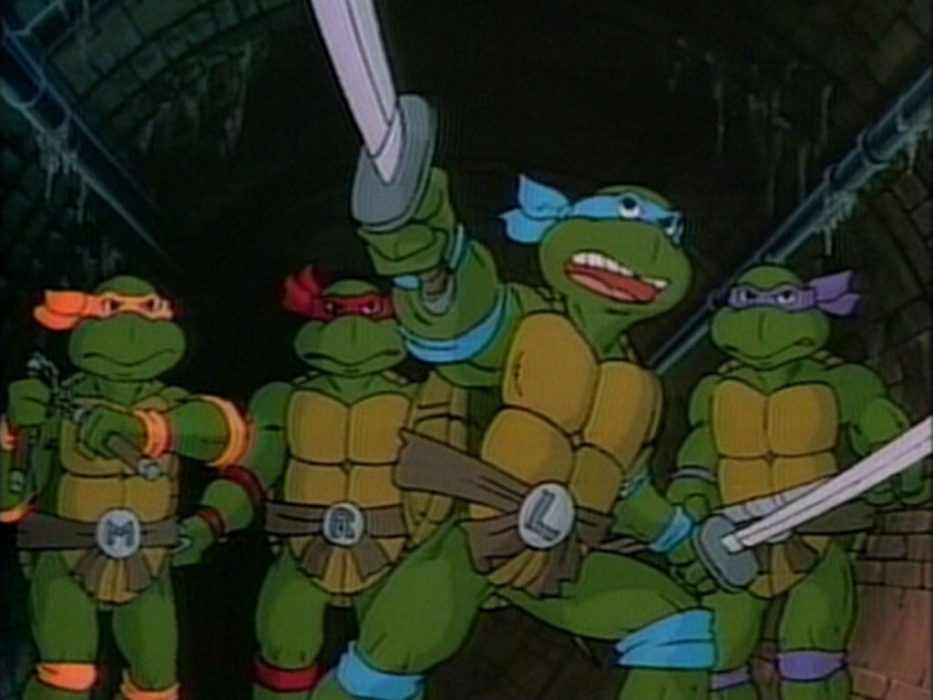
Rambling on about old episodes of Saturday morning cartoons and children’s TV is still the best part of the stoned, comedown, nonsense that ravers engage in after a night clubbing, a study has revealed.
Whether male or female, if you’re of a slightly equal age with your come down buddies then you are almost 75% likely to talk about Saved by the Bell or The Clangers at some point on your session wind down, the study claimed.
The shared bonding over childhood memories of waking up excitedly on a Saturday morning so you could sit on the floor in front of your TV while colourful shapes bounded across is, is now one of the most important friendship forming activities among ecstasy users, with almost all clubbing friendships occurring from the shared humanity that having watched the same show as a child brings.
The study claimed that people of varying ages will share memories of different cartoons and children’s TV, with those born in the 80s remembering Transformers, Ghostbusters and MASK, while users born in the 90s had fond memories of Rugrats, Bobby’s World and X-Men.
“Those born in the last decade are fucked though,” claimed survey leader Dr. James Bond Jr. “Cause, without exception, all the cartoons and kid’s TV shows made now are the televisual equivalent of being forced to watch yourself kick a dog to death to spare the life of a parent, only for the parent to be killed anyway.”
“The current generation’s come down talk will more likely revolve around Youtube videos they saw,” he continued. “Or funny memes.”
In order to investigate this phenomenon, Wunderground went live to a party to survey the quality of conversation as it happened among pill heads.
“I used to love that on a Saturday morning,” drawled a glass-eyed college fresher named Mark while handing another partier a spliff. “Don’t remember the name of it but, like, they had a fucking, mechanised robot thingys and they fought against this big monster yoke, it was quality. Have you seen that?”
When the second man, James, revealed that he had seen the show, a spark of recognition passed between the two young men, a spark that guaranteed friendship for life, or at least until the party breaks up or they have to go do a beer run.
“I actually thought he was a bit of a prick,” confided Mark to Wunderground after James had slipped off to the toilet. “But turns he watched Power Rangers as well so now I think he’s alright.”
“Although if for some reason he didn’t know who Bebop or Rocksteady were or be able to tell me what organisation Mumra was part of, I’d probably blank him forever,” he added.
According to the survey, most of the conversations proceed in a kind of half-remembered stupor with not very many people remembering the exact names of cartoons, but becoming excited when someone remembers an aspect of it.
“The theme music off it was mint,” continued Mark when James had returned and both attempted to sound out the theme music for their nodding gang of friends. “I can’t really do it, but you know it don’t ya? It was amazing.”
Experts believe that exposure to surreal cartoons every Saturday from the ages of 2 to 15 may have even had an impact on the psyche of the drug user, causing them to take drugs initially to recreate those colourful cartoon memories – which is why when the drugs wear off they revert back to talking about the cartoons.
“We think the cartoon form itself, with its bright colours, simple to understand narrative and mildly amusing dialogue, actually inform the drug experience itself,” concluded Dr. Bond Jr. “Older people, having grown out of cartoons remain indelibly influenced by the flashing colours and happy memories of cartoons and so choose to recreate that feeling with the use of psychotropic, hallucinagenic drugs like MDMA and acid.”